Commercial MAX

Valuit | Commercial MAX

Commercial MAX – Commercial Property Asset Valuations & Purchase Price Allocations (PPA)

Commercial property investments often contain valuable depreciable assets that can be overlooked when a property is bought, sold or accounted for.

Commercial MAX is Valuit’s specialist commercial property valuation service, designed to identify and accurately value individual property assets. Our detailed valuations help property owners, buyers, sellers and their advisers understand the allocation of property values and support appropriate depreciation deductions under New Zealand tax rules.

Whether you’re purchasing a commercial property, preparing to sell or reviewing an existing investment, our team can assist with property asset valuations and purchase price allocations (PPA).

With specialist experience dating back to 1998, Valuit helps commercial property investors make informed decisions and better understand the long-term value of their investments.

Let’s take a look at what you could expect from Commercial MAX

and what type of property would benefit.

Unlock the Potential of Your Commercial Property

From offices and warehouses to retail and industrial properties, Commercial MAX identifies and values assets that could make a significant difference to your investment’s depreciation potential.

Suitable Commercial Properties

Commercial MAX is suitable for a wide range of commercial and industrial investment properties, including:

  • Office buildings and premises
  • Retail shops and shopping centres
  • Warehouses and storage facilities
  • Industrial and manufacturing properties
  • Workshops and trade premises
  • Hospitality and accommodation properties
  • Commercial properties that you have renovated or fitted out.
  • Really its ALL commercial properties, it’s worth asking the question.

Depreciable Property Assets

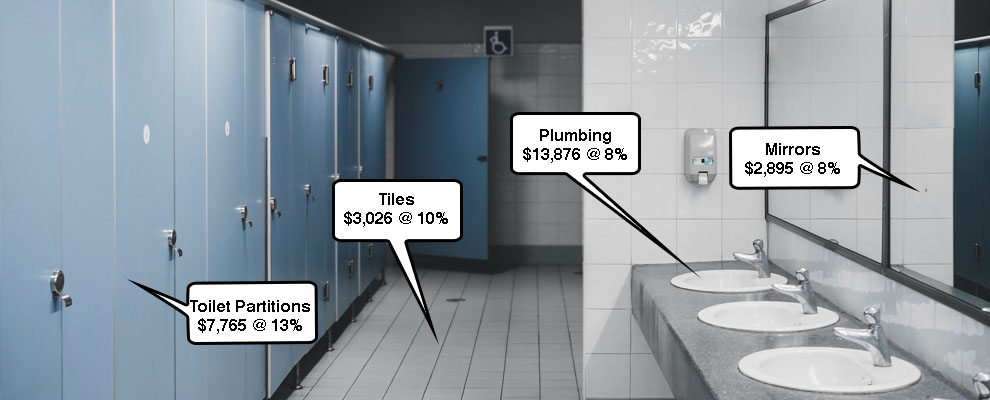
Commercial properties can contain many assets that may qualify for depreciation, including:

  • Heating and air conditioning
  • Lighting and electrical equipment
  • Carpets and floor coverings
  • Partitions and interior fit-outs
  • Security and access systems
  • Plumbing fixtures and equipment
  • Signage and specialist equipment
  • Fences, hardstandings and all land improvements

And that’s just the beginning — the list goes on!

Eligibility and depreciation rates depend on the asset and applicable tax rules.

Benefits of Commercial MAX

Commercial MAX helps uncover valuable depreciable assets that might otherwise be overlooked.

  • Identify eligible depreciable assets
  • Support greater depreciation deductions
  • Assist with purchase price allocations
  • Provide detailed values for your accountant
  • Improve long-term cashflow planning

Potential tax savings can reach tens or hundreds of thousands of dollars annually for some properties.

Actual savings depend on the property, eligible assets and tax circumstances.

Purchase Price Allocation (PPA) – Why Getting It Right Matters

Since 1 July 2021, New Zealand’s purchase price allocation rules have affected how buyers and sellers allocate the purchase price of certain commercial property transactions between different asset classes for tax purposes.

Getting this allocation right is extremely important for both vendors and purchasers. The values agreed during the sale and purchase process can have significant implications for future depreciation deductions and tax outcomes.

Buying or Selling Commercial Property? Get Advice Early.

We cannot stress enough the importance of obtaining professional advice as early as possible in the sale and purchase process.

For substantial commercial property transactions, getting the allocation right or wrong can potentially make a difference of tens or even hundreds of thousands of dollars over time.

Thinking of buying or selling? Contact Valuit now. Already purchased or sold? Get in touch — we may still be able to help.    Advice is free.

Understanding the Two Stages of Purchase Price Allocation

There are two important stages to consider: agreeing on the allocation of the purchase price between relevant asset classes, and identifying the individual depreciable assets within the property through Valuit’s Commercial MAX service.

Stage 1 – Sale and Purchase Contract

During the sale and purchase process, the purchaser and vendor should consider how the purchase price is allocated between depreciable and non-depreciable assets.

This allocation may be discussed through the real estate agent and should be reviewed with the parties’ legal and tax advisers before figures are agreed.

Three important asset categories to consider are:

  • Land – non-depreciable.
  • Buildings – generally subject to a 0% depreciation rate from the 2025 income year.
  • Depreciable Assets – eligible fixtures, fittings, commercial fit-out and equipment.

IMPORTANT – Don’t Overlook Depreciable Assets!

Fixtures, fittings and commercial fit-out can represent significant value. Failing to properly consider and allocate a value to depreciable assets during the sale and purchase process may compromise your ability to support future depreciation claims and could result in valuable tax deductions being missed.

The wording of the PPA is critical. Many property owners have not claimed their full entitlement, so the value of depreciable assets recorded in their asset register may be low in comparison to what you, as an incoming purchaser, may be entitled to claim.

Don’t get caught out. Don’t let their mistake impact you.

The most critical aspect for an incoming purchaser is to ensure they have the ability to further allocate the value of buildings as follows:

  • Not Previously Separately Depreciated Property – Depreciable assets that have not been separated from the building structure in the vendor’s asset register and are instead included within the building value.

Our advice: DO NOT agree to purchase price allocation figures without first seeking appropriate professional advice.

Stage 2 – Valuit Commercial MAX

Stage 2 takes the process further by identifying and valuing the individual depreciable assets within your commercial property. This is where Valuit’s specialist Commercial MAX service comes in.

Rather than treating fixtures, fittings and fit-out as one broad category, Commercial MAX provides a detailed breakdown of individual assets to support appropriate depreciation calculations.

Examples of assets assessed may include:

  • Air conditioning and heating systems
  • Electrical wiring and lighting
  • Plumbing fixtures and equipment
  • Commercial fit-out and partitions
  • Carpets and floor coverings
  • Security systems and signage
  • Specialist equipment and installations
  • Land improvements

And that’s only the beginning — the list of potential depreciable assets goes on!

Commercial MAX can be completed before or after settlement, depending on the circumstances. The detailed valuation provides information your accountant can use to determine eligible assets and appropriate depreciation treatment.

Unlock the Value of Your Commercial Property

Purchasing commercial property is a substantial investment. But are you fully aware of the value of the individual assets contained within your property?

A detailed Commercial MAX valuation can help identify assets that may otherwise be overlooked, separating eligible depreciable assets from non-depreciable property components.

This gives your accountant the information needed to assess legitimate depreciation deductions and helps you better understand the financial potential of your investment.

Maximise Your Eligible Depreciation Benefits

Different depreciable assets can have different tax depreciation rates. By accurately identifying and valuing eligible assets, Commercial MAX can help ensure the appropriate deductions are considered rather than overlooked.

For some commercial properties, the resulting tax savings can reach tens or hundreds of thousands of dollars each year.

The potential benefits depend on the property, its assets and the owner’s tax circumstances. For larger or extensively fitted-out commercial properties, the opportunity can be particularly significant.

Buying, Selling or Recently Settled?

Whether you’re preparing to purchase, considering selling or have recently settled on a commercial property, Valuit can help you understand the potential benefits of a detailed asset valuation.

Call (0508) 482 583 – Initial Advice Is Free.


Learn More About Commercial Property Depreciation

Purchase price allocation requirements, asset classifications and depreciation entitlements depend on the transaction and applicable New Zealand tax rules. Tax savings are not guaranteed. Seek professional tax and legal advice for your individual circumstances.

Commercial MAX Pricing

Quotation on Request

Every commercial property is different. Our pricing reflects the size, complexity and individual characteristics of your property.

Contact Valuit for a tailored quotation for your Commercial MAX asset valuation.

All quotations are provided in NZD, with GST identified separately where applicable.

Get Started

Ready to discover the potential value of your commercial property’s depreciable assets?

Whether you’re buying, selling or already own a commercial property, our team can discuss your requirements and provide a tailored quotation.


0508 482 583

Get in touch with Valuit today. Initial advice is free.

Contact Us

Learn More

Explore how commercial property depreciation works, why accurate asset valuations matter and how Valuit can help.


› Commercial Property Depreciation


› Depreciation – The Detail


› How It All Works

Learn more about identifying eligible assets and understanding the potential depreciation benefits of your commercial property.

SEE A COMMERCIAL PROPERTY EXAMPLE

See how identifying and valuing depreciable assets can make a difference to a commercial property’s depreciation position. Explore our existing example to better understand the potential benefits of a detailed asset valuation.

View Property Example

Examples are illustrative. Actual depreciation deductions and tax outcomes depend on the property, eligible assets and applicable tax rules.

A commercial property purchase example

Consider a commercial property purchased for $5 million. The purchase price may need to be allocated across several different asset categories, each with potentially different tax treatment.

A $5 million commercial property purchase

Illustrative figures only — not an actual Valuit assessment.

Asset categoryIllustrative allocation
Land$1,500,000
Building$2,700,000
Qualifying depreciable fit-out and equipment$600,000
Other separately depreciable improvements$200,000
Total purchase price$5,000,000

$800,000

Of the purchase price has been attributed to potentially depreciable assets.

The purchaser’s entitlement to deductions, the applicable rates and any resulting tax benefit depend on the actual assets, their classifications and the relevant tax rules.

Without appropriate asset identification and valuation, the purchaser may not have a reliable basis for establishing those values.

This is where Valuit’s specialist knowledge of plant and machinery valuation, building components and asset classification becomes particularly relevant.

Common Purchase Price Allocation Mistakes

Commercial property transactions can involve complex asset ownership, valuation and tax classification issues. Here are five common questions worth considering before finalising a Purchase Price Allocation.

Can we simply agree on one figure for buildings and chattels?

Combining different asset classes into a single figure can create problems when those assets have different tax treatments. Buildings, separately depreciable fit-out, plant and equipment may need to be identified and valued separately. An appropriate allocation should reflect the assets being transferred and the applicable tax requirements.

Can a purchaser change an agreed PPA after settlement?

An allocation agreed between the parties may have binding tax consequences under New Zealand’s Purchase Price Allocation rules. A purchaser should not assume that an agreed allocation can simply be changed after settlement. The agreement and applicable statutory requirements should be considered with professional advisers before the allocation is finalised.

Does the vendor’s allocation have to match the purchaser’s?

New Zealand’s Purchase Price Allocation rules are designed to address inconsistent tax allocations between purchasers and vendors. The values each party must use depend on the statutory rules and the circumstances of the transaction. Both parties should obtain appropriate advice rather than independently adopting conflicting allocations.

Who owns the fit-out in a tenanted commercial property?

Not all fit-out within a commercial property necessarily belongs to the landlord. Some items may be owned by tenants, depending on the lease and other relevant arrangements. Ownership should be established before including assets in a Purchase Price Allocation, because assets that are not being transferred should not automatically form part of the allocation.

Can we use the building’s insurance valuation for the PPA?

An insurance valuation generally considers the cost of reinstating or replacing insured property. A Purchase Price Allocation serves a different purpose: attributing transaction consideration to the relevant asset classes. An insurance valuation may provide useful background information, but it should not automatically be treated as a suitable basis for allocating the purchase price.

These answers provide general information only. The appropriate treatment depends on the transaction, the assets involved and the applicable legislation. Legal and tax advice should be obtained from suitably qualified professional advisers.

UNDERSTANDING PROPERTY DEPRECIATION

Watch our video to learn more about property depreciation and why identifying eligible depreciable assets is important for commercial property owners.

Depreciation Basics

COMMERCIAL PROPERTY

Whether you’re buying, selling or have already purchased
a commercial property, explore our helpful brochures
to find out how Valuit can assist.

⌂

Wanting to Buy

Considering purchasing a commercial property?
Learn more about purchase price allocations
and how Valuit can help.

↓ Download Brochure

⇄

Looking to Sell

Planning to sell a commercial property?
Explore useful information about purchase
price allocations and the sale process.

↓ Download Brochure

✓

Already Purchased

Already purchased your commercial property?
Find out more about reassessing purchase
price allocations and your available options.

↓ Download Brochure

Valuit Cashflow PRO

OWN A RESIDENTIAL INVESTMENT PROPERTY?

Valuit’s Cashflow PRO service helps residential investment property owners identify and value eligible depreciable assets, providing detailed information to support depreciation claims and tax planning.

Discover how a professional residential property asset valuation could help you make the most of the depreciation deductions available to you.

Explore Cashflow PRO